Mold Remediation
Spot the early signs, document what you find, and get matched with a local provider who can clear it safely.
Musty smell, new stains or bubbling paint? Learn the early signs of mold, then get connected with an independent local provider for inspection, testing or removal.
No obligationSeen a spot, smelled something musty, or want an inspection? Request a callback to check provider availability, or send a request and we will point you to a local provider.
No obligationCommon clues are a musty smell, gray, green or black spots, peeling or bubbling paint, and soft drywall. Check near leaks, windows and AC units. If you are not sure, take photos and ask a local provider about an inspection.
A small, dry patch on a hard surface can often be cleaned with gloves, goggles, a mask and ventilation. Large areas, mold inside walls, repeat growth or anything after flooding is better left to a provider. Do not mix cleaning chemicals.
Color alone does not tell you the type or the risk. Any mold indoors should be dealt with. If you suspect black mold, avoid disturbing it and ask a provider about testing and removal.
Typical U.S. prices range from several hundred dollars for a small area to several thousand for larger jobs. Inspections and testing cost extra. Costs vary by job, so request a written quote from each provider.
It depends on your policy and the cause. Some policies may cover sudden damage, such as a burst pipe, but not long-term neglect. Check your policy, and keep photos and records. Providers can often help document damage for a claim.
Mold rarely arrives with a bang. It starts as a musty whiff in the hall closet, a gray freckle on a bathroom ceiling, or paint that bubbles near a window. Catch it then, and the fix is often small. Wait through a few humid months and the same spot can turn into a wall job.
Funeraldefense Mold Help is a referral service. We do not scrub, cut open or test anything ourselves. We connect homeowners in Deltona and the Deltona area with independent local providers who handle mold inspection, testing and removal.
This page walks you through what to look for, what you can safely do with gloves and a spray bottle, and when to put the tools down. You will also find an easy way to gather photos and notes so estimates go faster.
If you have been typing mold inspection near me into your phone, the next step is simple. Request a callback to check provider availability in your part of FL. Tell the provider what you saw, where you saw it, and when it started.
Prefer to write it all down first? Use the request form and add your photos and notes when a provider follows up.
Funeraldefense Mold Help does not do the work. Independent providers in our network do the inspecting, testing and removal. Our job is to help you get to the right kind of provider without a day of cold calling.
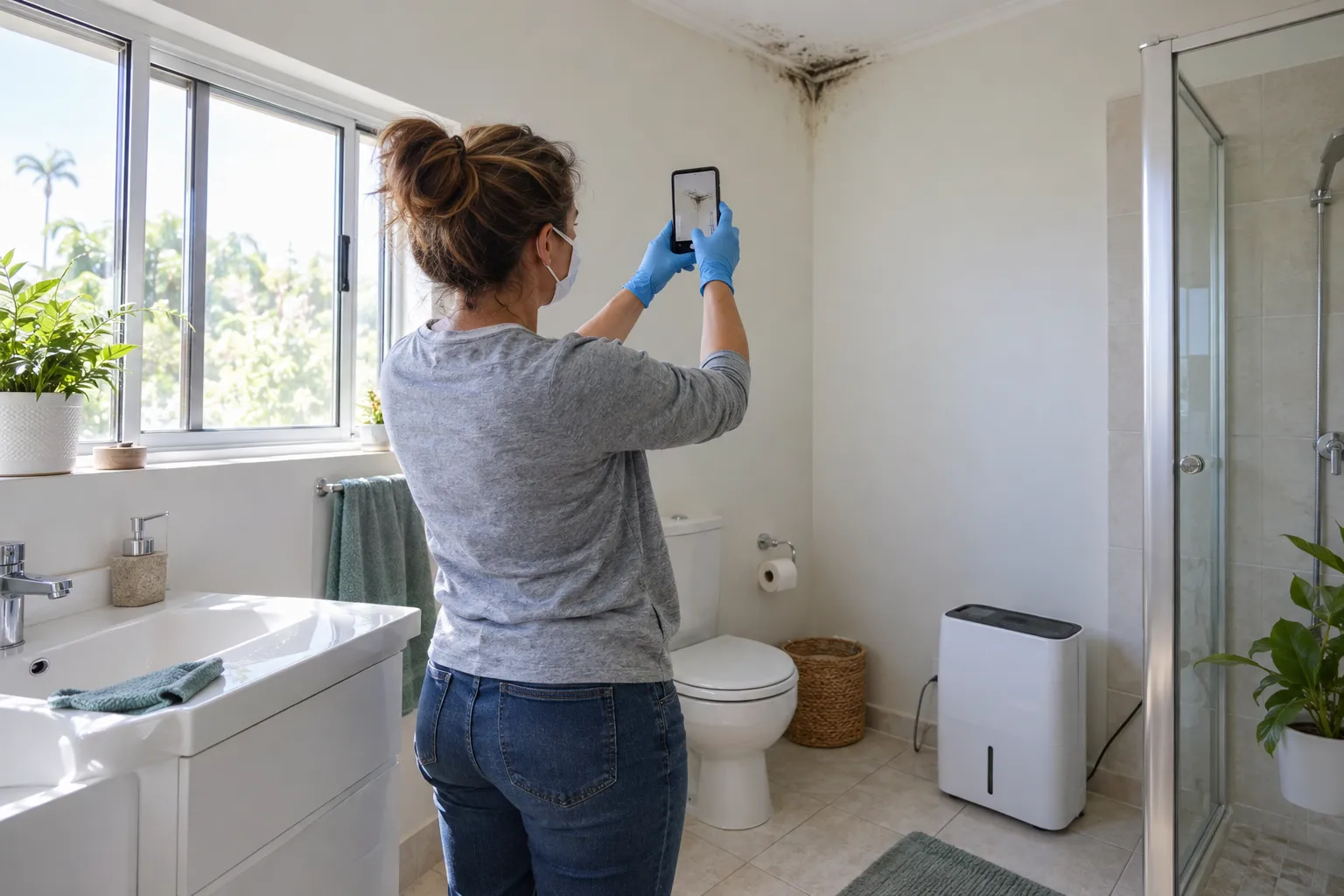
A provider can size up a job faster when you can say, "It started in March, it is behind the vanity, and it smells worse after rain." Photos with a coin or tape measure beside the spot give a sense of scale. That small bit of prep helps you compare estimates fairly.
A small, dry surface spot on a hard, nonporous surface is something many homeowners clean themselves with gloves, a mask and good airflow. Anything that keeps coming back, covers a large area, sits inside a wall, or follows a leak is a job for a provider. When you are not sure, stop scrubbing and ask.
Homes in Deltona and the Deltona area live with warm air, wet summers and humidity most of the year. Storms roll through almost daily in the summer months, and hurricane season runs from June to November. That is a lot of moisture for a house to shrug off.
Many homes here are concrete block on a slab, with tile or shingle roofs. There are few basements, but plenty of subdivisions built from the 1970s through the 2000s, plus condos where a neighbor's leak can become your problem. Mold likes closets, air handler areas, window frames, attic corners and the backs of cabinets.
Providers in our network work across the Deltona area. Coverage and scheduling vary by provider, so the quickest way to find out who can help at your address is to ask.
Request a callback to check provider availability near you, or send your details and ask for an estimate.
A musty, earthy smell is often the first clue. If a room smells off after the AC has been running, or after a stormy week, take it seriously. Sniff near closets, under sinks and around the air handler closet. Note where the smell is strongest.
Mold can look like gray, green, brown or black spots, or like a dusty smudge. Check the ceiling corners, window sills, grout lines and the bottom of drywall. Not every dark spot is mold, but every new one deserves a closer look.
Paint that blisters, drywall that feels soft, or baseboards that swell often point to hidden moisture. Press gently with a screwdriver handle. If the surface gives, there may be a leak behind it.
Mold needs water. Check under sinks, around toilets, near the water heater and along the AC drain line. After a storm, look at ceilings under the roof, especially below tile or shingle repairs. Fix the water source or the mold returns.
For a small patch on a hard surface, wear gloves, goggles and a mask. Open a window, wipe with a detergent solution, and dry the area fully. Never mix bleach with ammonia or other cleaners. Porous materials like drywall and carpet are usually not safe to just wipe.
Stop if the patch is larger than a few square feet, keeps returning, sits inside a wall, or showed up after flooding. Also stop if anyone in the home has breathing problems. Request a callback to check provider availability and describe what you found.
Color alone does not tell you what kind of mold you have. If you want answers, ask providers about certified mold testing and what the lab report will include. Black mold removal should be handled by a provider, not scrubbed dry or sanded.
Take dated photos from a few angles. Keep receipts, leak repair records and notes on smells or symptoms. Some policies may cover sudden damage, so check your policy. Providers can often help document damage for a claim.
In the U.S., inspections often run a few hundred dollars up to about a thousand, and remediation can range from several hundred dollars for a small area to several thousand for larger jobs. Costs vary a lot by job, so get a written quote.
If something looks or smells wrong, do not wait for it to get worse. Have your photos and notes handy, then call. A provider can tell you what to expect and what to do in the meantime.
Request a callback to check provider availability, or ask for an estimate with no obligation.
Three kinds of help are available through providers in our network. Pick the one that matches where you are right now: you suspect a problem, you need proof of what it is, or you already know it is there and need it gone.
Spot the early signs, document what you find, and get matched with a local provider who can clear it safely.
Find out if that smell or stain is mold, and how far it has spread.
Found dark, fuzzy growth in your home? Here is what to do first, what to skip, and when to stop.
Seen a spot, smelled something musty, or want an inspection? Request a callback to check provider availability, or send a request and we will point you to a local provider.
No obligation